
EN
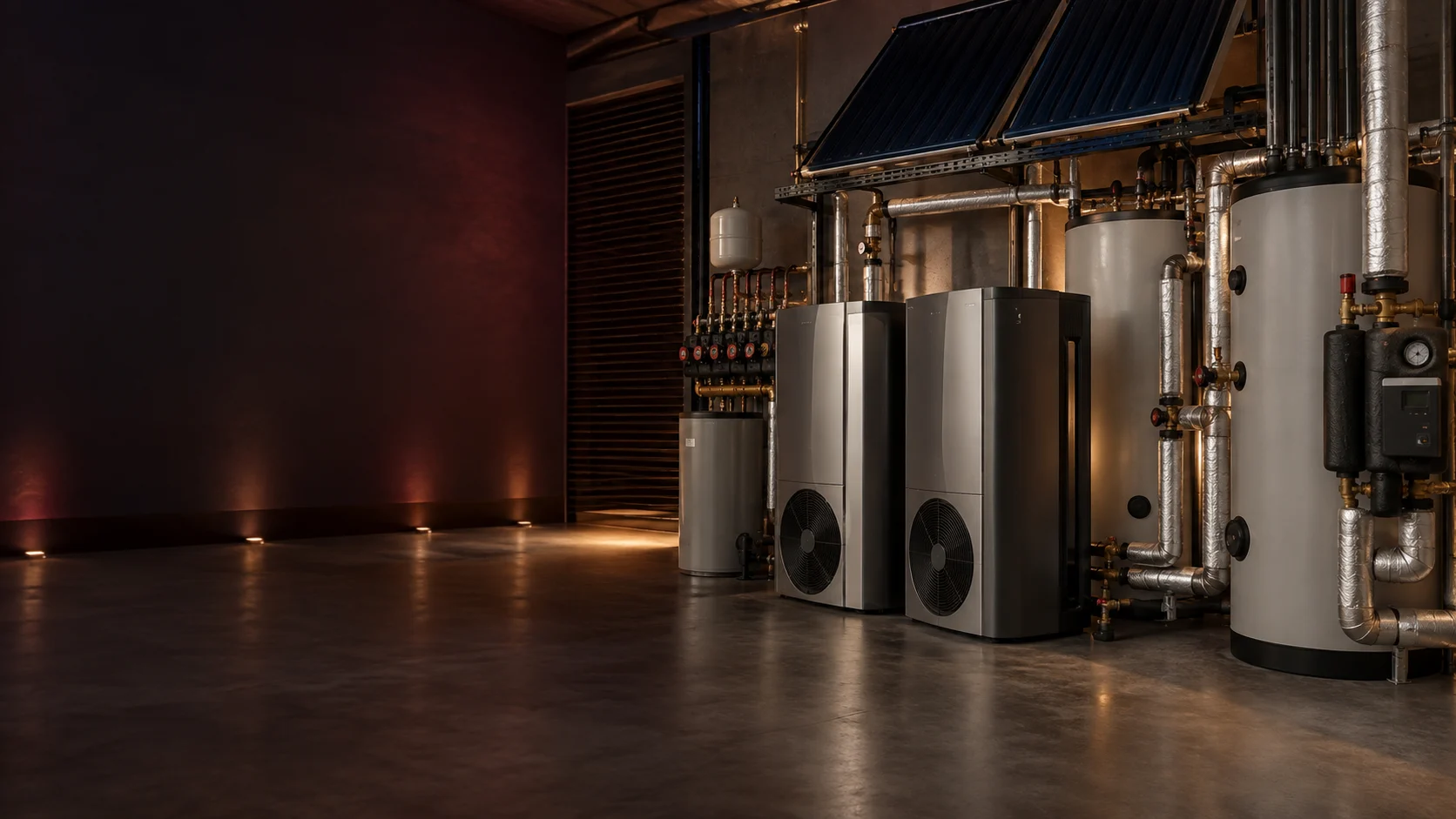
DHW design: production, storage and distribution
The domestic hot water (DHW) design defines how hot water is produced, stored and distributed in the building, with comfort and low consumption. We design domestic hot water production, storage and distribution installations, analysing usage needs and energy consumption.
End-to-end DHW
We develop complete domestic hot water system designs for new construction and refurbishment, from production through to distribution.
Solar thermal
Sizing of solar thermal collector fields (flat-plate or vacuum-tube) integrated with the storage tank and backup heating. Compliant with Ministerial Order 138-I/2021 (EN 12975) and Decree-Law 69/2023, as amended by Decree-Law 149/2026.
Heat pumps
Selection and sizing of air-to-water and geothermal heat pumps for DHW, integrated into hybrid systems with solar backup. Optimisation of COP and seasonal performance.
Boilers and storage tanks
Condensing gas boilers, insulated storage tanks, coils and thermal stratification systems to maximise efficiency and autonomy.
Distribution and recirculation
Thermally insulated networks, recirculation loops with controlled recirculation pumps, thermostatic mixing valves and hydraulic balancing of the network.
Legionella protection
Installation design to reduce Legionella risk: suitable storage and distribution temperatures, provision for thermal disinfection, elimination of dead legs, and sampling valves.
Efficiency and retrofit
Energy retrofit of existing DHW systems: replacing gas water heaters with heat pumps and adding solar thermal, with savings estimated case by case.
How we work
From the consumption profile to the acceptance of the hot-water systems, every stage is documented.
Consumption profile and use
We characterise occupancy, draw-off points and the hot-water use profile, and confirm with the client and the other designers the plant space and the area available for collectors or heat pumps.
Hydraulic calculation and sizing
Calculation of consumption (hourly profile and simultaneity), storage volumes, production capacity, network thermal losses and hydraulic balance.
Design development
We prepare the execution design: DHW schematic diagrams, network layouts, insulation, tanks, solar/heat-pump integration, recirculation and written documents.
Site support and review
We follow the execution: checking network insulation, tank location, connections to solar thermal/heat pump, and compliance with the design.
Commissioning
We take part in DHW system acceptance tests, checking outlet temperatures, flow rates, recirculation, solar/heat-pump performance and the Legionella protection protocol.
Regulatory requirements
What you gain with Afazeres Curiosos
Hot water for peak demand
Systems sized for the building's real peak demand, with adequate storage and recovery — sized for peak times.
Reduced energy consumption
Solar thermal and heat pumps reduce the energy bought to heat water; savings and payback are estimated for each project.
Regulatory compliance
The design is prepared in line with the applicable legislation, easing licensing and energy certification.
Integrated coordination
By also designing the electrical, telecommunications and fire safety (SCIE) systems, we aim to avoid clashes between disciplines that cause delays and extra costs.
We also review designs in this discipline produced by other designers. See how design review works →
Frequently asked questions about domestic hot water
What is domestic hot water (DHW)?
It is the heated water used day to day in the building: showers, washbasins and kitchens. A DHW system includes production (heat pump, solar thermal, boiler or other), storage and the distribution network to the taps.
Heat pump, solar thermal or both together?
They can work together. Some systems connect solar thermal collectors to the heat pump's tank: the sun heats the water when there is radiation, the heat pump tops up the rest and surplus solar can help heat the house. A heat pump alone suits almost any house; solar needs a well-oriented roof. The design chooses the right combination for the number of users, the space and the consumption.
What tank size do I need?
It depends on the number of people, consumption habits and production power. A tank that is too small runs short at peak times; one that is too large wastes energy keeping water hot. The design sizes the tank from the expected consumption.
How much does a DHW design cost?
It depends on the size and type of building, the scope required and the level of detail. We prepare the proposal after receiving the documents (architecture, number of users and preferred solution), to make sure what we propose fits what you need.
How do I request a proposal or contact you?
You can request a quote or an online consultation in the Client Room, write to geral@afazerescuriosos.pt, call +351 21 145 1077, message us on WhatsApp or book a preliminary call to frame your request.
How would you like to move forward with the efficiency and safety of your DHW system?
If you already know which service you need, request a quote. If you first need to weigh up alternatives or clarify a specific question, choose online consultancy.
Would rather talk to us first? See contacts